
Most UK small businesses should budget between £3 and £15 a month for shared hosting or £8 to £14+ a month for an all-in website builder plan that bundles hosting, SSL and templates together. VPS jumps to roughly £20–£40 a month, and dedicated servers start around £60 and climb into the hundreds. If you're running a simple brochure site or booking-led local business, start with shared hosting or a bundled builder plan. Only move up when your traffic or transaction volume actually demands it.
TL;DR:
- Most small UK businesses should budget between £3 and £15 monthly for shared hosting or website builder plans, which include hosting, SSL, and templates.
- Upgrading to VPS hosting costs about £20 to £40 per month, suitable for sites with growing traffic or booking systems that outgrow shared hosting.
- Annual costs for a basic DIY site range from £60 to £300, while managed small-business sites and e-commerce stores can reach £600 to over £1,200 depending on support and features.
- Many hosting providers offer low initial prices that can double or triple at renewal, with extra charges common for backups, SSL upgrades, and migrations.
- Bundled hosting platforms like aceSites offer simplified options with one subscription, built-in SEO, templates, and easy setup, ideal for local service businesses.
Table of Contents
- Types of hosting and typical UK price ranges
- What drives your hosting bill up or down
- Realistic budgets for three common UK small-business scenarios
- Hidden fees and renewal traps to check before you sign up
- How to choose the right hosting for your business
- The real annual cost of running a website in the UK
- Why bundled hosting suits so many UK service businesses
- Get your website live without the hosting headache
- Sources
Types of hosting and typical UK price ranges
The word "hosting" covers a handful of very different products, and mixing them up is the fastest way to overpay or underprovide. Here's what each one actually gets you.
Shared hosting puts your site on a server alongside dozens or hundreds of other websites, all splitting the same CPU and RAM. It's the cheapest option going, typically £3 to £15 a month, and it suits a basic brochure site, a portfolio, or a single-location tradesperson's site that gets modest, predictable traffic. The trade-off is performance: if another site on the same server has a traffic spike, yours can slow down too.
Managed WordPress hosting adds a layer of technical babysitting on top of shared or cloud infrastructure: automatic updates, security scanning, and support staff who actually know WordPress. Expect to pay more than basic shared hosting, often into the £15 to £30 a month range once you factor in the managed premium, though this varies by provider and traffic allowance.
VPS (Virtual Private Server) hosting gives you a dedicated slice of a server's resources, ring fenced from other users. Prices commonly sit at £20 to £40 a month. It suits businesses with growing traffic, a busy booking system, or a site that's started to feel sluggish on shared hosting but doesn't yet need a full dedicated machine.
Cloud hosting spreads your site across multiple servers rather than one physical box, so it scales automatically during traffic spikes. Managed cloud plans often land in a similar £20 to £60 a month band, and this is the natural home for a growing ecommerce store or a site that gets seasonal surges (think a wedding florist in June).
Dedicated servers hand you an entire physical machine. Prices range from around £60 a month up to several hundred pounds for high-spec configurations, depending on scope. Very few small UK businesses need this. It's built for high-traffic platforms, large databases, or businesses with strict compliance requirements that demand total resource isolation.
Website builders with bundled hosting fold everything, hosting, SSL, templates, and support, into a single subscription, usually £8 to £14 or more a month. This is the pragmatic middle ground for most local service businesses: no server management, no separate SSL purchase, no juggling three different supplier invoices.
Quick summary of where each type fits:
- Shared hosting — brochure sites, single-page portfolios, low-traffic local businesses.
- Managed WordPress — content-heavy sites where you'd rather pay than fiddle with plugins.
- VPS — growing traffic, booking systems, sites that have outgrown shared hosting.
- Cloud — seasonal spikes, ecommerce with unpredictable demand.
- Dedicated — high-traffic platforms or strict data isolation needs.
- Bundled builders — anyone who wants one bill, one login, and no technical maintenance.
What drives your hosting bill up or down
Four things push your hosting cost higher, and understanding them stops you from either overpaying for capacity you'll never use or underbuying and hitting a wall six months in.
Resources are the obvious lever. CPU and RAM determine how many visitors your site can handle at once before it slows down. Storage type matters too: SSD storage costs more than older HDD storage but loads pages noticeably faster, which matters for both visitor patience and Google's ranking signals. Bandwidth, the amount of data your site can transfer per month, rarely bites small brochure sites but becomes a real cost driver for sites with video, large image galleries, or high traffic volumes.
Managed versus unmanaged support is the second big lever. Unmanaged hosting is cheaper because you (or your web developer) handle updates, security patches and troubleshooting yourself. Managed hosting costs more, but that premium buys you a support team who fix problems before you notice them. For a business owner who isn't technical, and most aren't, managed support or a bundled builder platform is usually worth the extra spend.
Add-ons stack up quietly. Watch for these:
- Backups — some hosts include daily backups free; others charge £2 to £10 a month extra.
- Premium SSL certificates — basic SSL is often free now, but extended validation certificates cost extra.
- Business email — sometimes bundled, sometimes a separate £3 to £6 per mailbox monthly charge.
- CDN (content delivery network) — speeds up loading for visitors outside your immediate region, occasionally a paid extra.
- Monitoring and SLAs — uptime guarantees with compensation clauses tend to sit on higher-tier plans only.
- UK-based data centres — can matter for latency and simplifying GDPR compliance if that's a business requirement.
Billing frequency changes your total too. Annual billing almost always beats monthly, often by 15% to 30%, but introductory discounts can mask what you'll actually pay from year two onwards.
Pro Tip: Before you commit to any plan, work out the renewal price, not just the sign-up price. Providers routinely discount year one and quietly double or triple the rate at renewal.
Realistic budgets for three common UK small-business scenarios
Numbers mean more with a scenario attached. Here are three worked examples that reflect how UK small businesses actually spend on hosting.
-
DIY brochure site. A sole trader or small local service business running a five-page site with a contact form. Hosting: £5 to £10 a month. Domain: £10 to £15 a year. SSL: usually included free. Basic email: £3 to £5 a month if not bundled. Total first-year cost typically lands around £60 to £300, assuming you're not paying anyone for design or ongoing maintenance.
-
Managed small-business site. A business with a blog, booking widget, and a handful of service pages, wanting someone else to handle updates and security. Hosting or bundled builder subscription: £10 to £20 a month. Domain and email: much the same as above. Occasional content updates or minor design tweaks: budget an extra £20 to £50 a month if you're paying someone else to do them. Annual total commonly runs £250 to £600.
-
Small ecommerce store. A shop selling products online, needing payment processing reliability and the ability to handle traffic spikes around sales periods. This is where VPS, managed cloud, or a robust ecommerce-ready builder plan earns its keep, since growing transaction volume genuinely needs the extra headroom. Hosting: £20 to £60 a month. Add payment gateway fees, product photography, and possibly a premium theme. Annual totals of £600 to £1,200 or more are common once you factor in these extras.
The trigger for upgrading is usually obvious in hindsight: your site starts loading slowly during busy periods, checkout errors creep in, or your host starts sending "resource limit" warnings. Treat those as your cue to move up a tier rather than waiting for a crisis.
Hidden fees and renewal traps to check before you sign up
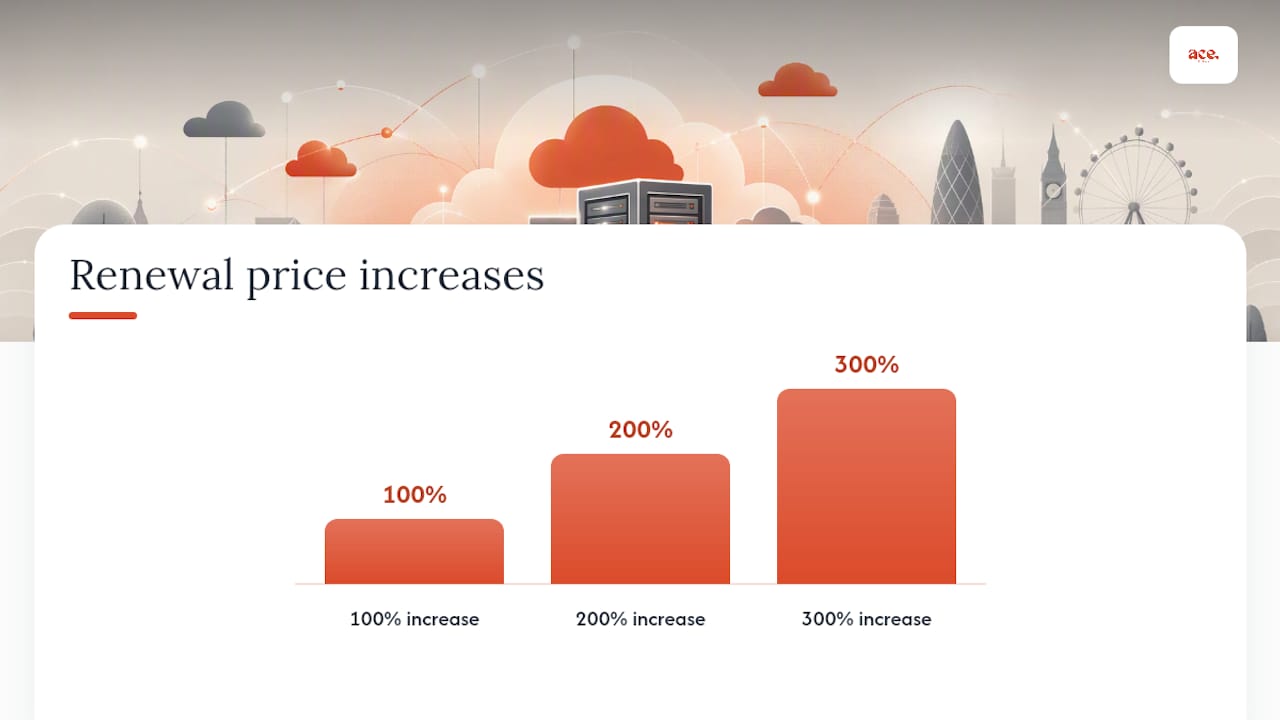
The advertised price rarely tells you the whole story. Many hosts run aggressive introductory offers that jump sharply at renewal, sometimes by 100% to 300%, once the first term ends. A £3 a month headline price can quietly become £9 or £12 a month in year two.
Watch for these separate charges that don't always appear in the headline price:
- Domain privacy protection — often £5 to £15 a year if not included.
- Site migration fees — some hosts charge to move your site in, or out, of their platform.
- Backup add-ons — daily backups sometimes cost extra beyond a basic weekly snapshot.
- Premium SSL tiers — standard SSL is usually free, but wildcard or extended validation certificates cost more.
Before signing anything, run through this checklist: What's the SLA (service level agreement) and does it include compensation for downtime? What's the backup policy, and how far back can you restore? Will they help migrate your site for free, or charge? Where is the data centre located? And critically, what are the cancellation terms if you need to leave?
How to choose the right hosting for your business
Match your decision to your actual goals rather than the biggest discount banner you see. If cost control matters most and your traffic is modest, shared hosting or a bundled builder plan wins. If you're planning growth or launching an online shop, weight your decision towards VPS, cloud, or an ecommerce-ready platform that can scale without a full migration later.
Ask any host or agency these questions directly:
- What resources (CPU, RAM, storage) am I guaranteed, not just "up to"?
- How often are backups taken, and how do I restore one myself?
- What's your average support response time, and is that support UK-based?
- Do you offer a staging environment to test changes before they go live?
- What does migration cost if I want to move providers later?
- Where's your data centre, and does that matter for my GDPR obligations?
Red flags worth walking away from: vague answers about resource limits, no mention of backup frequency, a contract that penalises early cancellation heavily, or a sales team that can't tell you the renewal price when asked directly.
Pro Tip: Ask for the renewal price in writing before you sign up. A host confident in its own value has no reason to dodge the question.
The real annual cost of running a website in the UK
Hosting is one line on a bigger invoice. A full annual picture for a small UK business typically includes: hosting or a bundled subscription, domain renewal, SSL (often free but occasionally a paid tier), business email, basic maintenance or plugin updates, and, if you're not doing it yourself, design or content support.
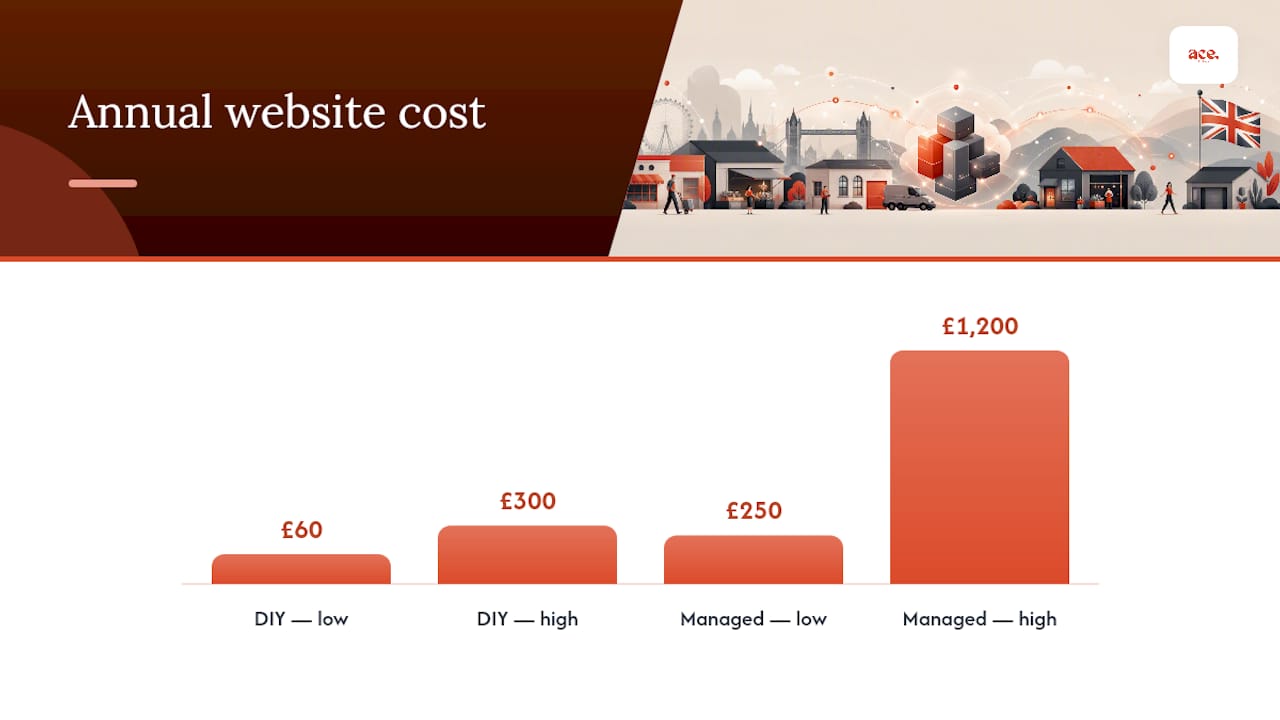
For a lean DIY setup, £60 to £300 a year covers the essentials. Add managed support, regular content updates, or agency involvement, and that figure climbs to £250 to £1,200 or more, depending on scope. Neither figure is wrong. They just reflect how much you're paying someone else to worry about it instead of you.
A few practical habits keep this manageable:
- Pay annually where the discount is meaningful. Most hosts knock 15% to 30% off for yearly billing.
- Budget separately for one-off events. A redesign every few years, or a security incident cleanup, rarely fits inside your regular monthly spend.
- Review your plan yearly. A tier that suited you two years ago may now be either overkill or too tight.
- Bundle where it genuinely simplifies your life. One subscription covering hosting, SSL and updates beats three separate invoices from three separate suppliers, even if the raw hosting cost looks marginally higher on paper.
Why bundled hosting suits so many UK service businesses
The businesses that struggle most with hosting costs aren't the ones paying too much. They're the ones piecing together separate invoices for hosting, SSL, backups and support, then losing track of what it all adds up to. aceSites bundles hosting, SSL and site management into one subscription, which suits a plumber, beautician or local tradesperson who wants a working website without becoming an amateur systems administrator.
That said, a bundled builder isn't the answer for everyone. A growing ecommerce business with heavy transaction volume will eventually need the dedicated resources of VPS or cloud hosting instead.
— Gabbi
Get your website live without the hosting headache
Piecing together hosting, SSL, backups and a builder from three different suppliers is exactly the kind of admin most small business owners don't have spare hours for. aceSites gives you all of it in one subscription, built specifically for local service businesses that want to go live fast without learning server management along the way.
The platform includes built-in SEO tools, a blog manager, booking widget support and mobile-optimised templates, so you're not bolting on extras later at extra cost. If you'd rather not build it yourself, the free "done for you" website build means you pay nothing until you've actually seen the finished site. Check the full feature list and see whether a bundled, transparent-pricing setup fits your business better than assembling hosting, SSL and maintenance piecemeal. Book your free build and see your site before you commit to anything.
Sources
- Best website builders UK (page with plan and cost summaries)
- How Much Does a Website Cost in the UK? A 2026 Price Guide for Small Businesses - Switchweb