
Getting clients online is defined as the process of using digital channels, including outbound outreach, inbound content, and paid advertising, to attract and convert paying customers. For small business owners and service providers in the UK, mastering this process is no longer optional. Responding to a lead within 60 seconds can increase your close rate by 400%. That single fact tells you everything about how competitive online client acquisition has become. The businesses winning right now combine fast outbound tactics with long-term organic growth, and this guide shows you exactly how to do both.
What are the best digital channels to get clients online?
The four core channels for online client acquisition are outbound outreach, inbound marketing, paid advertising, and referrals. Each one works differently, and each suits a different stage of business growth.
Outbound means you go to the client first. Cold email, LinkedIn direct messages, and targeted cold calls all fall into this category. Outbound channels are the fastest path to your first 1–10 clients because they do not require an established brand or existing audience. You can start today and book a meeting this week.

Inbound means clients find you. SEO, blog content, social media, and lead magnets pull prospects toward you over time. Inbound is slower to build but far cheaper per lead once it gains momentum.
Paid advertising sits between the two. Google Ads and Meta Ads generate leads quickly, but the cost is ongoing. The moment you stop paying, the leads stop coming.
Referral leads carry the highest conversion efficiency but the lowest predictability. A warm introduction bypasses credibility gaps entirely, which is why referred clients close faster and stay longer. The problem is you cannot schedule referrals. Treat them as a bonus channel, not a primary strategy.
| Channel | Speed to results | Cost | Predictability |
|---|---|---|---|
| Cold outreach | Fast (days) | Low | High |
| Inbound / SEO | Slow (months) | Low long-term | Medium |
| Paid advertising | Fast (days) | High ongoing | High |
| Referrals | Variable | Very low | Low |
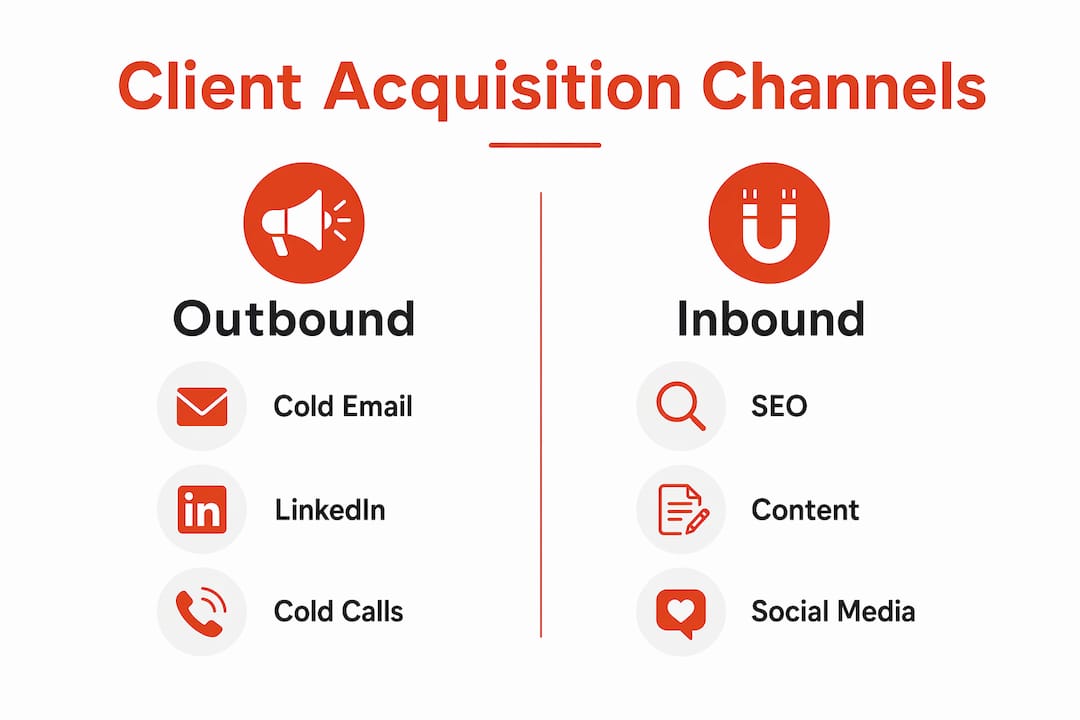
The most effective approach combines outbound for immediate cash flow and inbound for compounding growth over time.
How to set up fast outbound outreach to land your first clients
Outbound outreach works best when it is targeted, personal, and technically sound. Follow these steps to build a campaign that actually reaches inboxes.
-
Build your ideal client profile. Define the type of business you want to work with: industry, size, location, and the specific problem you solve for them. A plumber targeting landlords in Manchester needs a very different message than one targeting estate agents in Bristol.
-
Build a prospect list. Use LinkedIn Sales Navigator, Google Maps, or industry directories to find businesses that match your profile. Aim for a list of at least 50–100 contacts before you start sending.
-
Set up your email infrastructure. Cold email deliverability is a major bottleneck. If your emails land in spam, the campaign fails regardless of how good your copy is. Set up SPF, DKIM, and DMARC records on your sending domain. Use a separate subdomain for cold outreach and warm it up gradually over two to four weeks before sending at volume.
-
Write hyper-personalised emails. Generic emails get deleted. Reference something specific about the prospect's business in the first line. Keep the email under 150 words. State clearly what you do, who you help, and what you are asking for. One clear call to action per email.
-
Track your key metrics. Monitor open rates, reply rates, and meeting-booked rates. A healthy cold email campaign achieves an open rate above 40% and a reply rate above 5%. If your numbers fall below this, test a new subject line or opening sentence.
-
Follow up consistently. Most replies come from the second or third follow-up, not the first email. Send three to five follow-ups spaced three to five days apart before marking a prospect as inactive.
Pro Tip: Set up your cold email on a separate domain that mirrors your main domain (e.g. getacmeplumbing.co.uk instead of acmeplumbing.co.uk). This protects your primary domain's reputation if the campaign triggers spam filters.
How to attract clients organically with inbound marketing
Inbound marketing builds a pipeline that works while you sleep. It takes longer to set up than outbound, but the leads it generates are warmer and cheaper over time.
The foundation is content. Long-form blog posts of 1,500 to 2,000+ words consistently outperform short articles in search rankings. Search engines favour content that covers a topic thoroughly. A 300-word page about "boiler servicing in Leeds" will not rank. A 1,800-word guide that answers every question a homeowner has about boiler servicing will.
Beyond traditional SEO, you now need to think about Generative Engine Optimisation (GEO). SEO and GEO work together to maximise visibility in both standard search results and AI-powered answers. GEO means structuring your content with clear entity information, demonstrating genuine expertise, and building E-E-A-T signals (Experience, Expertise, Authoritativeness, and Trustworthiness). Prospects now complete much of their research through AI search tools before they ever contact you. Your online information must be consistent and authoritative across every channel.
Social selling on LinkedIn is one of the most effective inbound tactics for service providers. Post practical content that demonstrates your expertise two to three times per week. Comment on posts from your ideal clients. Build relationships before you pitch anything.
The critical step most small business owners skip is owning their audience. Social media followers are a borrowed audience. The platform can change its algorithm or restrict your reach at any time. Building an email list and CRM gives you first-party data that no platform can take away. Behavioural email sequences, triggered by what a prospect clicks or downloads, convert far better than generic newsletters.
Pro Tip: Offer a free lead magnet, such as a checklist, short guide, or free audit, in exchange for an email address. This converts website visitors into contacts you can nurture directly.
Key inbound tactics ranked by long-term return:
- Long-form SEO content targeting high-intent search queries
- GEO-optimised pages structured for AI assistant answers
- LinkedIn content and social selling
- Email list building with lead magnets
- Behavioural email nurture sequences
- Webinars and live Q&A sessions for your niche
What tools and technical setups support online client acquisition?
Your website is a conversion tool, not your primary marketing engine. A professional LinkedIn profile and a clear service offer are enough to land your first clients. Your website matters most when a prospect is doing background research before deciding to contact you. It needs to load fast, look credible, and make it easy to get in touch.
Beyond the website, you need a small but reliable tech stack:
- CRM system: Track every prospect and where they are in your pipeline. Free tools like HubSpot CRM work well for small businesses starting out.
- Email authentication: SPF, DKIM, and DMARC records are non-negotiable for any email outreach.
- SEO tool: Google Search Console is free and shows you exactly which search terms bring people to your site. Pair it with a keyword research tool to find what your ideal clients are searching for.
- Behavioural email platform: Tools that trigger emails based on what a contact clicks or downloads convert significantly better than scheduled newsletters.
- Analytics: Google Analytics 4 shows you which pages convert visitors into enquiries. Use it to cut what does not work and double down on what does.
You can also learn how to get more website enquiries by optimising your contact forms, calls to action, and page layout. Small changes to your site's structure often produce a significant lift in enquiry volume.
Common mistakes that stop you getting more customers online
Most small business owners make the same handful of errors. Avoiding them puts you ahead of the majority.
- Slow lead response. Responding to an enquiry hours later dramatically reduces your chance of winning the work. Aim to respond within minutes, not hours.
- Spreading too thin. Trying to be active on every platform at once produces mediocre results everywhere. Pick one or two channels, do them well, and expand later.
- Ignoring email deliverability. Sending cold emails without SPF, DKIM, and DMARC in place means most of them land in spam. Fix the technical setup before you write a single word of copy.
- Relying on rented audiences. Building your entire presence on social media alone is risky. Moving prospects from social platforms to owned email lists creates durable growth that no algorithm change can disrupt.
- No follow-up system. Most prospects need multiple touchpoints before they buy. Without a follow-up sequence, you leave money on the table every single week.
- No clear call to action. Every email, social post, and web page should tell the reader exactly what to do next. "Book a free call," "Download the guide," or "Get a quote" are all clear. "Feel free to reach out" is not.
Pro Tip: Document your client acquisition process as a Standard Operating Procedure (SOP). SOPs for client acquisition create consistency and make it far easier to delegate or scale your outreach as your business grows.
Key takeaways
Getting clients online requires a deliberate combination of fast outbound outreach, long-form inbound content, owned audience data, and a technically sound website that converts visitors into enquiries.
| Point | Details |
|---|---|
| Respond to leads fast | Replying within 60 seconds can increase your close rate by 400%. |
| Combine outbound and inbound | Use cold outreach for speed and SEO content for long-term, lower-cost growth. |
| Fix email deliverability first | Set up SPF, DKIM, and DMARC before sending any cold email campaign. |
| Own your audience data | Build an email list so algorithm changes cannot cut off your leads. |
| Document your process | SOPs make your client acquisition consistent and easier to scale. |
What I have learned about getting clients online after years in the field
The biggest mistake I see small business owners make is treating outbound and inbound as competing strategies. They are not. They solve different problems at different timescales. Outbound gets you clients this month. Inbound builds the pipeline that makes next year easier. You need both running at the same time.
The second thing I have noticed is how much client behaviour has shifted. Prospects now research you through AI tools before they ever pick up the phone. They ask ChatGPT or Perplexity who the best local accountant or web designer is, and they get a curated answer. If your content is thin, inconsistent, or buried on page three of Google, you simply do not exist in that answer. GEO is not a future concern. It is a present one.
The businesses I have seen grow fastest are the ones that own their audience. They do not just post on Instagram and hope for the best. They collect email addresses, build CRM records, and send genuinely useful content to their list every week. That consistency compounds. A list of 500 engaged contacts is worth more than 5,000 social media followers you cannot directly reach.
My honest advice: start with outbound to generate cash flow, build your inbound content in parallel, and make capturing email addresses your number one website goal from day one.
— Gabbi
A professional website that works as hard as you do
If you are putting the strategies in this article into practice, your website needs to hold up its end of the deal. A slow, hard-to-navigate site loses clients that your outreach worked hard to attract.
Ace-sites builds professional websites for small businesses and service providers across the UK, with built-in SEO tools and lead capture features designed to turn visitors into enquiries. The best part: you pay nothing until you have seen and approved your finished site. There are no hidden costs and no technical headaches. Take a look at the done-for-you website service and see how quickly you could have a site that actively supports your client acquisition.
FAQ
How quickly can I get clients online as a new business?
Cold email and LinkedIn outreach can produce your first client meetings within days. Inbound methods like SEO take several months to build momentum.
What is the most cost-effective way to attract clients online?
Long-form SEO content combined with an email list delivers the lowest cost per lead over time. The upfront effort is high, but the ongoing cost is minimal compared to paid advertising.
Do I need a website to get clients online?
A website is not strictly required to land your first clients. A professional LinkedIn profile and a clear service offer are enough to start. A website becomes important when prospects research you before making contact.
What is Generative Engine Optimisation (GEO)?
GEO is the practice of structuring content to appear in AI-generated search answers. It focuses on entity clarity, E-E-A-T signals, and authoritative content that AI assistants can cite confidently.
How many follow-up messages should I send to a prospect?
Send three to five follow-ups spaced three to five days apart. Most positive replies come from the second or third message, not the first.